

Big-Water Ice Fishing: Tactics for the Great Lakes and Large Reservoirs
By: FishUSA Staff
January 22, 2026
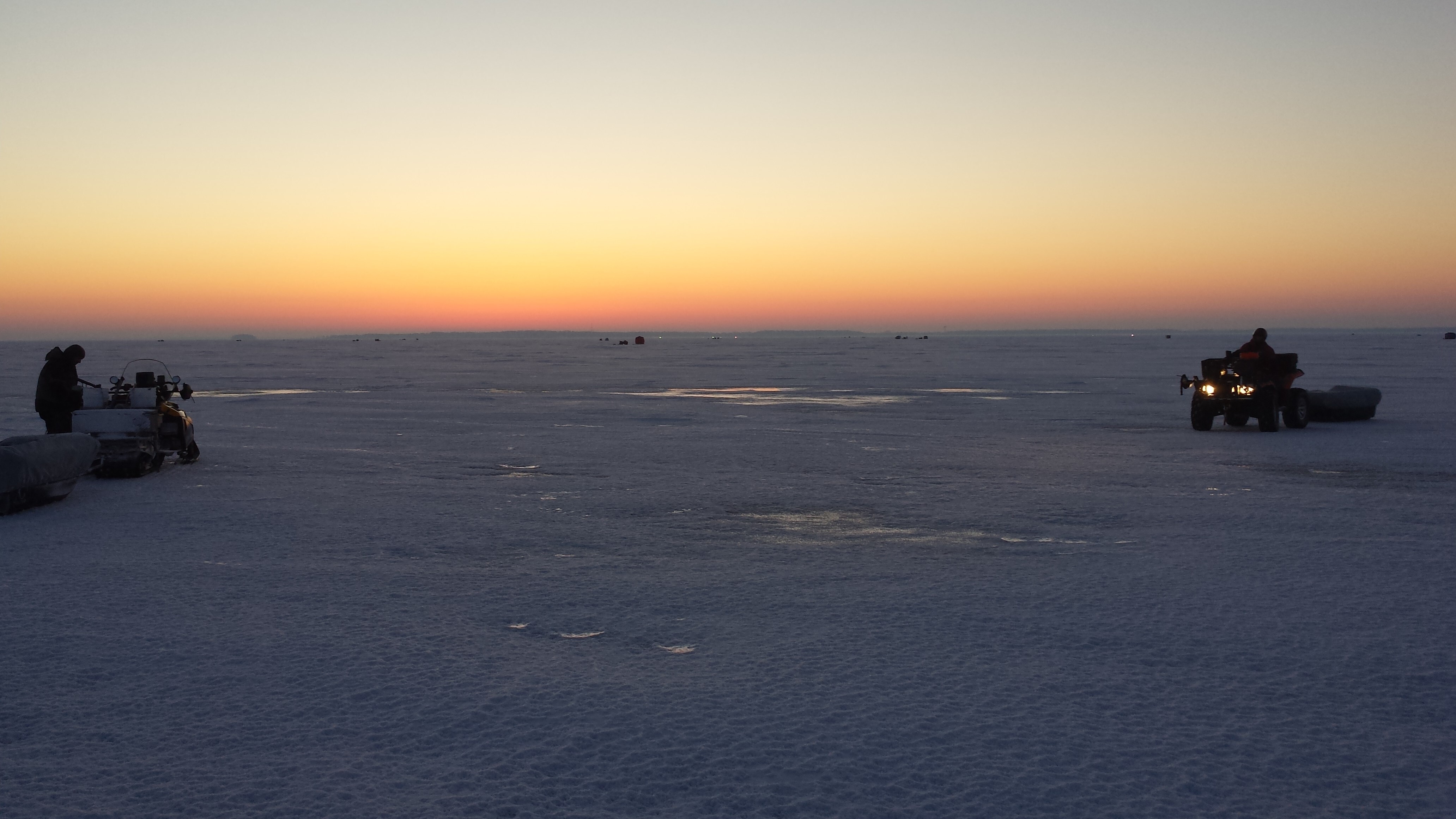
So you’ve mastered small inland lakes and you’re ready to step up. Now the question becomes: how do you take everything you know and apply it to Great Lakes ice fishing or massive reservoirs where “the spot” is measured in miles instead of yards? Big water offers huge walleyes, giant lake trout, roaming whitefish, and burbot—along with ice that can move, crack, and drift in ways that surprise even experienced anglers.
So you’ve mastered small inland lakes and you’re ready to step up. Now the question becomes: how do you take everything you know and apply it to Great Lakes ice fishing or massive reservoirs where “the spot” is measured in miles instead of yards? Big water offers huge walleyes, giant lake trout, roaming whitefish, and burbot—along with ice that can move, crack, and drift in ways that surprise even experienced anglers.
This advanced guide is built for anglers who already understand basic ice fishing and want serious big lake ice fishing tips specific to the Great Lakes and large reservoirs. We’ll talk through big-water safety (without sugarcoating the risks), mapping and pre-season scouting, reading offshore structure, species-specific tactics, deep-water electronics, and how to stay mobile without getting reckless.
If you want to level up from “I catch fish on my local lake” to “I can pattern walleyes and lake trout on big water all winter,” this is your blueprint.
Table of Contents
- Big-Water Ice vs Small-Lake Ice: What Changes and Why It Matters
- Safety First: Risk Management for Great Lakes and Reservoir Ice
- Mapping and Pre-Season Scouting for Big Lakes and Reservoirs
- Reading Big-Water Structure Under the Ice
- Species-Focused Tactics for Great Lakes and Big Reservoirs
- Big Lake Ice Fishing Tips: Gear, Electronics, and Mobility
- Mobility, Spread, and Hole Strategy on Big Water
- Weather, Seasonal Patterns, and Big-Water Ice
- Common Mistakes in Great Lakes and Big-Water Ice Fishing
- FAQs – Great Lakes Ice Fishing and Big-Water Tactics
- Conclusion: Level Up Your Big-Water Ice Game
Big-Water Ice vs Small-Lake Ice: What Changes and Why It Matters
The Scale Problem: Miles of Structure and Roaming Fish
On a 100-acre inland lake, “structure” might be one main point, a weed flat, and maybe a basin edge. On a Great Lake or massive reservoir, that same structure type can run for miles. Fish can—and do—use that whole complex, not just the little corner you happen to be parked on.
This is the first major mindset shift for great lakes ice fishing:
- You’re patterning zones and corridors, not just single waypoints.
- You’re chasing bait movement across large basins and flats.
- You need enough mobility and gas (literally and figuratively) to cover water at scale.
The good news? When you figure out how fish are using a big reef complex or basin edge, that pattern can hold over a huge area and across multiple access points.
Ice Formation and Stability on Big Water
Big water doesn’t freeze like a farm pond. Wind, fetch, and current can:
- Delay freeze-up or create huge variations in ice thickness.
- Push sheets of ice into shorelines, creating pressure ridges and heaves.
- Open and close cracks and leads in a single day when the wind shifts.
This complexity is why offshore ice fishing safety on the Great Lakes is a different animal. You’re not just asking, “Is there 5 inches of ice here?” You’re asking, “What happened to this ice yesterday and what could it do if the wind switches?” We’ll circle back to big-water safety shortly, because it underpins every other decision you make.
The Advanced Angler Mindset
On big water, fish behavior is heavily influenced by weather, forage shifts, and large-scale structure. Successful anglers:
- Log every trip—depth, wind, weather, moon, water clarity, bait seen, fish marked and caught.
- Rely heavily on mapping and electronics rather than “that one hole that worked last year.”
- Think in terms of patterns and routes, not spots.
If you’re not already documenting each outing, start now. Every season you fish big water without a log is a season of expensive experience you can’t fully use later.
Safety First: Risk Management for Great Lakes and Reservoir Ice
Before we talk about dialing in advanced big lake ice fishing tips, we need to make sure you come home. Big water can be unforgiving.
Currents, Pressure Ridges, and Moving Ice
Currents—whether from rivers, deep-water inflows, or wind-driven circulation—thin ice from below. Pressure ridges form where ice sheets collide. Both are normal on big water, but you need to approach them with caution:
- Never cross a pressure ridge without checking thickness on both sides.
- Be extremely cautious near river mouths, narrows, and known current areas.
- If local anglers avoid a certain corridor or ridge, assume there’s a reason.
Before each trip, check your state’s fish and wildlife agency or DNR for ice advisories and closures, and consult marine forecasts for wind direction and strength.
Offshore Safety Gear and Travel Systems
On big water, your minimum safety kit should include:
- A quality float suit or PFD, plus ice picks worn around your neck.
- A spud bar for checking ice ahead as you walk or just off your machine.
- A throw rope and compact rescue kit accessible on your sled.
- GPS (standalone and/or app), a compass, and a backup power source.
- VHF or reliable communication if you’re far from shore or cell service.
Travel systems—ATVs, snowmobiles, or tracked machines—should be maintained and outfitted for big water: spare belt, plugs, tow strap, and extra fuel.
Weather Windows and Distance Limits
A simple rule: don’t let the fishing be better than your judgment. For big-water ice fishing:
- Set personal limits for maximum distance you’ll travel offshore in given conditions.
- Avoid venturing far on rapidly building winds or when a major shift is forecast.
- Always factor the ride back in, especially if visibility drops or cracks open up.
It’s better to fish closer to shore on a questionable day than to ride heroically offshore and end up on the wrong side of a broken sheet at dark.
Mapping and Pre-Season Scouting for Big Lakes and Reservoirs
Use Open-Water Season to Build Your Winter Plan
The best big-water ice anglers treat open-water season as a scouting trip for winter. When you’re trolling, casting, or jigging:
- Mark waypoints on any reef, hump, saddle, finger, or break that holds fish.
- Note depths, bottom composition, and current direction—those features matter under ice.
- Screenshot interesting sonar returns (bait clouds, rock transitions) to review later.
Come winter, those waypoints form the skeleton of your Great Lakes ice fishing “milk run.” You’re not guessing where the reef is—you already fished it in October.
Digital Mapping Tools for Big-Water Ice Fishing
Modern mapping is a cheat code if you know how to use it:
- HD contour chips and apps reveal subtle 1–2 foot breaks on otherwise flat basins.
- Basin edges, long bars, and complex reef systems jump off the screen once you learn to read them.
- Satellite overlays can help identify shoreline features, access points, and potential current zones.
Building a Repeatable Big-Water “Milk Run”
Instead of one miracle waypoint, build a network:
- Choose 4–8 main structures within a reasonable travel radius of your launch.
- Include multiple depths and orientations (e.g., wind-facing vs leeward sides of reefs).
- Plan a logical route that lets you test several spots while keeping an eye on cracks and pressure ridges.
Over seasons, you’ll refine which parts of each complex produce in specific conditions. Your big-water logbook becomes more valuable than any social media “hot tip.”
Reading Big-Water Structure Under the Ice
Reef Systems, Shoals, and Island Complexes
On big water, reefs and shoals are walleye and lake trout magnets. Think of them as underwater islands with different “zones” to fish:
- Crown/top: Often best at low light; walleyes and whitefish push shallow to feed.
- Shoulders / upper breaks: Transitional zones where fish travel between top and deep water.
- Base / surrounding basin edge: Daytime holding areas, especially when bait is off the break.
- Saddles between reefs or between reef and shore: Natural funnel routes for roaming fish.
Rather than camping on one depth, use your mapping and sonar to cycle through these zones until you locate where fish are traveling that day.
Basin Edges, Flats, and “Featureless” Contours
What looks like a flat may hide subtle changes that matter:
- Soft-to-hard bottom transitions where whitefish and walleyes feed.
- Small 2–3 foot dips or rises along a 20-foot flat that attract bait.
- Long edges where depth slowly rolls from, say, 28 to 34 feet over a mile.
On big lakes, those gentle slopes and transitions often hold more fish than the obvious, “cartoon” structures everyone else hammers.
River Channels and Reservoir Structure
Large reservoirs add another layer: submerged river channels, secondary channels, roadbeds, and flooded points. For large reservoir ice fishing:
- Follow the main channel edge and target inside turns and bends for walleyes and sauger.
- Look for submerged roadbeds and points that intersect the channel at key depths.
- Pay attention to current—especially near dam faces and inflows—where ice can be thinner.
If you already log open-water reservoir fish, you’re halfway to a good ice plan.
Species-Focused Tactics for Great Lakes and Big Reservoirs
Great Lakes Walleye Ice Fishing Tactics
Walleyes on big water behave differently than on small lakes. Instead of hugging one weedline, they often roam vast flats and reef systems following bait. Key concepts:
- Depth ranges: Early ice may find fish 10–20 feet on structure; midwinter may push them into 25–40+ or suspended over basins.
- Presentations: Rattle baits, glide baits, and spoons are primary search tools; deadsticks or tip-downs with live minnows seal the deal on neutral fish.
- Edges and mudlines: Slightly stained water along a mudline or wind-blown edge often fishes better than ultra-clear conditions.
Related: Ice Fishing for Walleye: Expert Techniques, Gear, and Strategies
Lake Trout and Deep-Water Predators
Lake trout might be the ultimate big-water ice target. On Great Lakes and large reservoirs, they often relate to:
- Sharp breaks off reef edges.
- Basin humps and isolated rock piles.
- Bait schools in 40–120 feet of water.
Effective presentations include heavy white tubes, swimbaits, large spoons, and dead bait rigs. With modern electronics, many anglers play a “cat-and-mouse” game—pulling lakers 30–40 feet up off bottom with aggressive jigging, then pausing to trigger the strike.
Related: Ice Fishing for Lake Trout: Techniques, Gear, and Tips
Whitefish, Burbot, and Other Big-Lake Specialists
Big water also offers whitefish, burbot (eelpout), and other species that rarely get targeted on small lakes:
- Whitefish: Often feed on bugs in soft-bottom flats or chase small bait along breaks; light spoons and jigs near bottom excel.
- Burbot: Night-active predators on rocks and reefs; deadbait on bottom or slow gliding lures work well.
- Basin panfish and perch: Big reservoirs and some Great Lakes bays hold huge perch schools that roam along subtle breaks.
These species are perfect for advanced anglers who’ve already checked “walleyes and lakers” off the list and want something different.
Big Lake Ice Fishing Tips: Gear, Electronics, and Mobility
Rods, Reels, and Line for Deep-Water Big Fish
On big water, your gear has to handle deeper water, larger fish, and sometimes heavy current:
- Rods: 36–42" medium to medium-heavy rods for lakers and big walleyes; slightly softer rods for spoons and live bait.
- Reels: Quality spinning reels with smooth drags and enough capacity for braid + leader in 60+ feet.
- Line: 10–15 lb braid mainline with 8–12 lb fluorocarbon leaders for most big-water applications, adjusted by species and cover.
Sled, Shelter, and Long-Run Systems
Your sled and shelter setup are part of your big-water system. Effective approaches:
- Keep weight low and centered in the sled to handle long runs and rough pressure ridges.
- Mount electronics and rod racks so you can deploy quickly and keep gear organized.
- Choose a shelter that can handle wind—flip-overs and well-anchored hubs with quality ice anchors are essential.
On the Great Lakes, you’re often fishing wind-swept, open ice. Don’t skimp on tie-downs and anchor points.
Electronics for Big-Water Ice Fishing
Electronics are non-negotiable if you’re serious about Great Lakes ice fishing:
- Traditional sonar or flasher: For vertical jigging, reading bottom, and tracking fish in the column.
- GPS mapping: To hold on structure edges and repeat productive lines or drifts under the ice.
- Forward- or down-facing live imaging: Game-changing for understanding how fish and bait move along big flats and breaks.
Guides and advanced anglers often use sonar to “see” fish 60–100 feet away, then only drill where they see life. To help readers develop these skills, link to an Ice Fishing Electronics Guide and, if available, a forward-facing sonar primer.
Mobility, Spread, and Hole Strategy on Big Water
Designing Drilling Patterns for Huge Structures
On big water, you need a plan before you ever fire up the auger. Effective patterns include:
- Contour-following lines: Holes drilled along a specific depth around a reef or basin edge.
- Spoke patterns: Radiating out from a central high-spot or hump to find where fish are traveling.
- Grids: Over flats or subtle structures where you’re hunting for micro-breaks or bait concentrations.
Don’t burn yourself out drilling randomly. Use your map and sonar to make every hole part of a deliberate search pattern.
Multi-Angler Spreads and Communication
Big-water efficiency multiplies when you fish with partners:
- Spread out along different parts of a break or across multiple depths.
- Use radios or phones to call in others when someone finds active fish.
- Rotate who hole-hops and who works deadsticks or set-lines.
This approach covers more water quickly without each angler taking on risky distances alone.
Knowing When to Stay and When to Move
Advanced anglers avoid both extremes: they don’t abandon a good area too quickly, but they also don’t grind unproductive water all day. Simple guidelines:
- If you’re marking fish regularly but not getting bites, adjust presentations, cadence, and lure size before moving.
- If you’re seeing no marks at all for 20–30 minutes on big water, move—fish could be hundreds of yards away.
- Use your logbook: if a spot consistently produces at a certain time or condition, give it a fair chance before writing it off.
Weather, Seasonal Patterns, and Big-Water Ice
Early Ice vs Midwinter vs Late Ice
On big lakes and reservoirs, seasonal progression can be summarized as:
- Early ice: Nearshore structure, embayments, and first-freezing areas; often big-fish opportunities close to access.
- Midwinter: Offshore basins, reef complexes, and deeper breaks become primary, especially when snow cover builds.
- Late ice: Fish trend back toward spawning areas, river mouths, and shore-connected structures.
Your strategy for great lakes ice fishing should adapt to these shifts—even if that means changing access points or target depths.
Wind, Clarity, and Barometric Pressure
Wind direction and speed can:
- Create mudlines and turbidity edges that concentrate bait and walleyes.
- Drive surface currents that subtly affect how fish position on structure.
Barometric pressure matters less than many anglers think—but major, rapid changes do influence fish behavior. The real key on big water is tracking consistency vs chaos in weather patterns over several days.
Knowing When to Stay Home
Advanced anglers understand that “no trip” is sometimes the best decision. If wind, ice reports, and local intel all say “iffy,” trust that.
Common Mistakes in Great Lakes and Big-Water Ice Fishing
Scaling Up Small-Lake Tactics Without Adapting
Classic mistake: sitting stubbornly on a tiny “spot” on a reef, because that’s what worked back home on a 200-acre lake. On big water, you must:
- Fish entire structural complexes, not just their most obvious corners.
- Cover edges, crowns, saddles, and basins until you find the pattern.
Underestimating Ice Movement and Offshore Risk
Another common error is treating big-water ice like a static platform. It isn’t. Anglers get in trouble by:
- Ignoring wind shifts that open and close cracks and leads.
- Using yesterday’s safe path without reevaluating today’s conditions.
- Riding farther offshore than their safety gear and experience justify.
Not Logging Data or Building Long-Term Patterns
Without a log, every season starts from scratch. For big-water success:
- Record depths, structure, weather, current, and water clarity for each trip.
- Log which presentations produced and which didn’t.
- Note time-of-day and seasonal timing of each good bite.
Patterns emerge—by month, weather, and lake section—that can’t be “Googled.” They have to be earned.
FAQs – Great Lakes Ice Fishing and Big-Water Tactics
Is Great Lakes ice fishing safe for solo anglers?
It can be, but the margin for error is small. If you’re new to big water, go with partners or a guide, especially at early or late ice. Always carry safety gear, share your plan, and stay within a conservative distance of shore.
What is the best time of winter for Great Lakes ice fishing?
It varies by lake and year, but many anglers favor the heart of the season—once ice has stabilized and before late-ice runoff complicates conditions. Early ice can be phenomenal if you’re cautious and know the lake, while late ice often brings aggressive pre-spawn fish and improved bite windows.
How thick should the ice be before going offshore on big lakes?
There’s no one-size rule, but many experienced anglers look for well over the minimum walking thickness (often 4+ inches) before venturing far offshore, and more for machines. Test often with a spud and rely on local knowledge—thickness alone doesn’t account for current and structural hazards.
What electronics are must-haves for big-water ice fishing?
At minimum, a flasher or ice sonar and GPS mapping. On vast water, mapping and waypoints are as important as real-time sonar. Forward-facing or down-imaging live sonar isn’t mandatory, but it’s extremely useful on big flats and deep structure.
How can I find big-lake structure if I don’t have boat waypoints?
Start with digital maps and focus on obvious reefs, bars, and basin edges. Use your first season to “scout” under ice with mapping and sonar, logging every fish-holding area you find. You can also study open-water reports and lake surveys from your state agency for clues.
What lures work best for big-water walleyes and lake trout?
For walleyes: spoons, rattle baits, glide baits, and jig/minnow combos. For lake trout: heavy tubes, large spoons, swimbaits, and deadbait. On big water, size and weight matter—you need baits that reach depth quickly and stay in the zone.
How far offshore can you safely travel on the Great Lakes?
“Safe” depends on conditions, ice history, and experience. Some anglers feel comfortable several miles out under stable conditions; others never leave sight of shore. The key is conservative judgment, current information, and an honest assessment of your gear and skill level.
Are large reservoirs safer than the Great Lakes for ice fishing?
Not necessarily. Reservoirs often have fluctuating water levels, strong currents near dams, and complex channels. They may be smaller than a Great Lake, but they can still be dangerous if you treat them casually. The same big-water mindset and safety practices apply.
Conclusion: Level Up Your Big-Water Ice Game
Great Lakes ice fishing and big-reservoir hardwater aren’t just bigger versions of the local pond—they’re a different discipline. When you understand macro-structure, respect the ice, leverage mapping and electronics, and tailor your gear and tactics to deep, roaming fish, you unlock a fishery that can change your idea of what winter fishing even is.
Start by building a conservative, safety-first approach. Add pre-season scouting and detailed logging so each trip improves your understanding of the lake. Then layer on species-specific tactics for walleyes, lakers, whitefish, and burbot, backed by thoughtful mobility and efficient spreads. Over time, the chaos of big water turns into a system you can read and exploit.
If these big lake ice fishing tips helped you see big water differently, share this article with a partner you trust on the ice.
Shop Ice Fishing Gear